
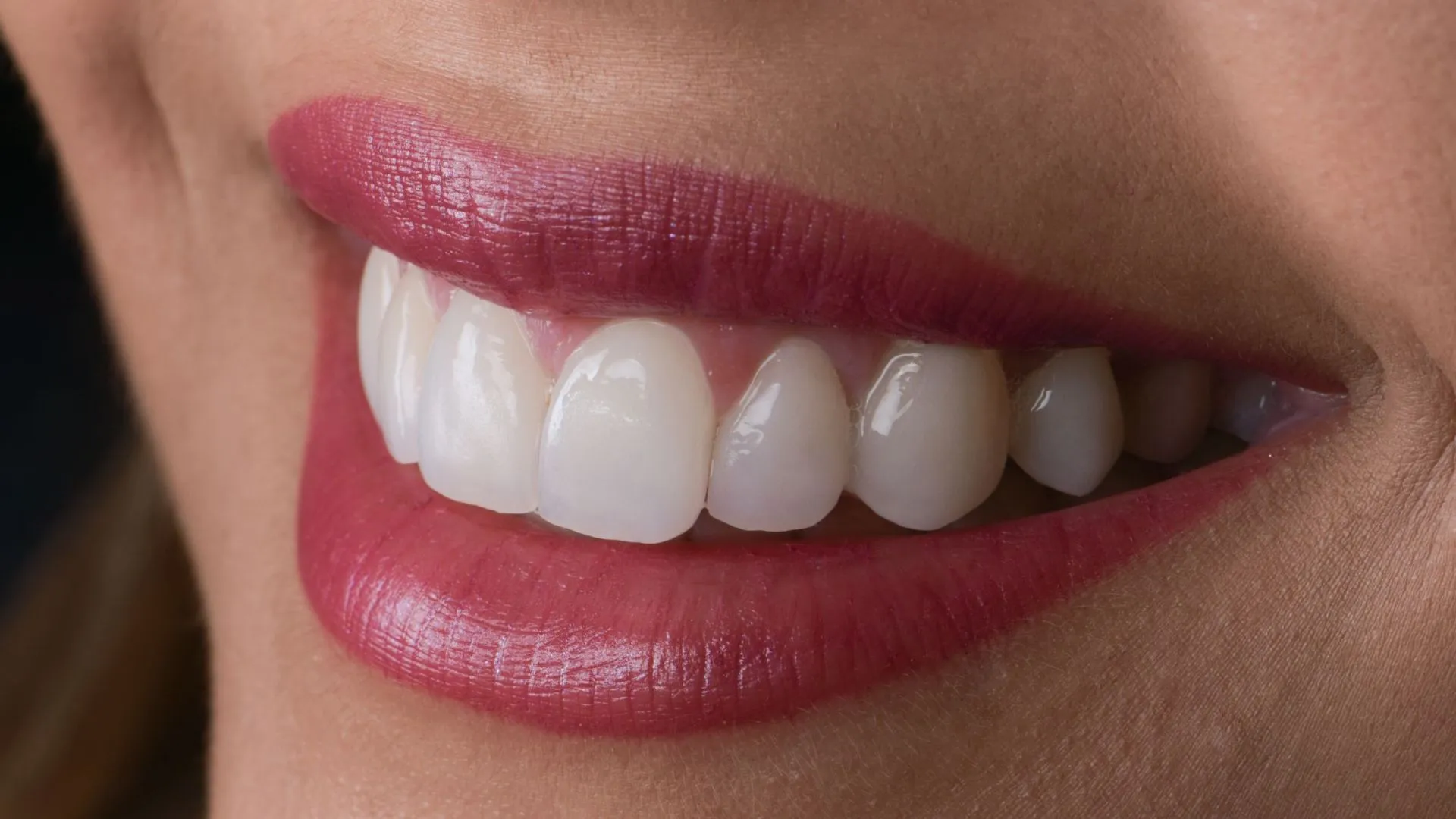
Veneers and smile design represent a personalized dental planning approach applied to enhance the aesthetic appearance of teeth in terms of color, shape, size, and alignment. If you are concerned about the appearance of your anterior teeth, interdental spacing, or your smile line, this approach may be suitable for you based on a clinical examination.
Table of Contents
OpenSmile aesthetics involves far more than simply achieving whiter teeth. It entails a comprehensive evaluation of tooth morphology, the gingival margin, lip structure, facial proportions, and the patient's daily facial expressions. The objective is not to create a standardized, artificial-looking smile, but rather to achieve a balanced, harmonious, and natural aesthetic appearance tailored to the individual's face.
These procedures must be performed based on a clinical examination and personalized planning by a dentist experienced in aesthetic dentistry. This is crucial because the selection of veneers is determined not merely by the commercial name of the material, but by the overall health of the teeth, the occlusal relationship, and the patient's realistic expectations.
What are Dental Veneers?
Dental veneers are thin aesthetic restorations applied to the visible surface of the anterior teeth. They can be utilized to correct tooth discoloration, morphological anomalies, size discrepancies, and minor interdental spacing.
Veneers are primarily indicated for anterior teeth. This service may be considered when a patient is dissatisfied with the color, shape, short appearance of their teeth, minor fractures, or the presence of interdental spacing.
Veneers can be utilized in the following clinical scenarios:
- Presence of permanent tooth discoloration
- Morphological deformities of the anterior teeth
- Presence of minor interdental spacing (diastema)
- Teeth that appear short, thin, or asymmetrical
- Compromised aesthetics due to old composite restorations
- When a more precise and organized smile line is planned
The decision to proceed with veneers should not be based solely on aesthetic desire. The condition of the dental enamel, periodontal health, the occlusal relationship, and the patient's parafunctional habits must be thoroughly evaluated.
What is Smile Design?
Smile design is the comprehensive planning of the teeth in complete harmony with the facial structures. This process takes into account tooth color, size, shape, gingival display, lip line, and facial symmetry.
Many patients associate smile design exclusively with achieving bright white teeth. In professional practice, however, the goal is not to provide an identical tooth shape to every individual. The restorations must be customized to fit the patient's face, their appearance during speech, and their natural facial expressions.
During the smile design process, the dentist evaluates not only the color of the teeth but also the overall facial anatomy, lip line, gingival display, and the patient's realistic expectations concurrently.
The following parameters may be evaluated during smile design:
- Facial morphology
- Lip line and dynamics
- Incisal display and tooth visibility
- Gingival margin and contour
- Length of the anterior teeth
- Interdental proportions
- Tooth shade and color
- The patient's age and expectations
This stage may involve an intraoral examination, photo-protocol, digital impressions, and, where appropriate, mock-up planning. The mock-up serves to provide the patient with a preliminary visualization of the final clinical outcome.
What is a Hollywood Smile, and is it Identical to Veneers?
A Hollywood Smile is a comprehensive, multidisciplinary treatment plan executed to enhance the color, shape, and overall harmony of the smile line. Veneers can be a component of this plan, but a Hollywood Smile is not defined by veneers alone.
In Azerbaijan, most patients requesting a Hollywood Smile seek significantly whiter and highly symmetrical teeth. In professional practice, however, the primary objective is not to create excessively white, oversized, and artificial-looking teeth. The smile must be planned in strict accordance with the facial structure.
The following procedures may be evaluated together within a Hollywood Smile treatment plan:
- E-max veneers
- Laminate veneers
- Feldspathic veneers
- Tooth bleaching (whitening)
- Gingival contouring / Gingivoplasty
- Aesthetic recontouring of tooth shape
- Diastema closure
- Replacement of old restorations
For instance, if a patient is concerned solely with tooth discoloration, professional tooth bleaching may suffice. Conversely, another patient may require comprehensive planning involving tooth shape, interdental spacing, and the smile line. Consequently, the cost and treatment plan for a Hollywood Smile vary significantly for each individual patient.
What are the Types of Veneers?
Veneers differ based on their material composition and fabrication methods. The most frequently utilized options include E-max veneers, feldspathic veneers, composite veneers, and laminate veneers.
It is crucial not to confuse these terms. A laminate veneer is understood as a thin ceramic restoration applied to the anterior surface of the tooth. E-max and feldspathic, on the other hand, represent different types of ceramic materials utilized in the fabrication of these restorations.
Therefore, the primary question for the patient should not merely be "laminate or E-max?". The essential question is: which material is most appropriate given the clinical status of the teeth, the aesthetic expectations, and the occlusal relationship?
| Type of Veneer | Indications / Suitable Cases | Primary Characteristic |
|---|---|---|
| E-max veneer | Anterior tooth aesthetics, color and shape correction | A highly durable and aesthetic ceramic option |
| Feldspathic veneer | Ultra-thin restorations with high aesthetic demands | Provides excellent natural translucency and depth effect |
| Composite veneer | Minor diastemas, small fractures, and simple shape corrections | Can be a faster and more cost-effective option |
| Laminate veneer | Surface aesthetics of the anterior teeth | Applied using a thin ceramic shell/layer |
E-max Veneers
E-max veneers are advanced ceramic restorations utilized for anterior teeth in aesthetic dentistry. They are frequently selected in smile design due to their high durability and their capacity to closely mimic the appearance of natural teeth.
E-max veneers may be indicated in the following scenarios:
- When the patient is dissatisfied with the shade of their anterior teeth
- Presence of asymmetry in tooth morphology
- When minor interdental spaces need to be closed aesthetically
- When a more durable ceramic restoration is desired
- When a complex, comprehensive smile design is being planned
E-max veneers can achieve a remarkably natural appearance when the correct shade and morphology are selected. However, if the tooth features large composite restorations, severe attrition, or if the patient exhibits severe bruxism, the material selection must be approached with greater caution.
Feldspathic Veneers
Feldspathic veneers are ultra-thin ceramic restorations that can be utilized in cases with exceptionally high aesthetic demands. This material helps create an appearance that closely mimics the light transmission and natural translucency of natural tooth enamel.
Feldspathic veneers are primarily considered in anterior aesthetics where the patient places a premium on an ultra-natural appearance. However, not all dental structures are suitable candidates for this material. The condition of the dental enamel and the occlusal relationship must be thoroughly evaluated.
Composite Veneers
Composite veneers are fabricated by directly applying specialized aesthetic composite resin materials over the tooth surface. In certain clinical cases, they can serve as a rapid solution for minor fractures, diastemas, and morphological corrections.
While composite veneers may appear to be a more economical alternative, they differ from ceramic veneers regarding color stability, surface luster retention, and long-term aesthetic longevity. Therefore, patient expectations must be managed appropriately from the outset.
Composite veneers may be suitable in the following cases:
- Presence of a minor fracture in an anterior tooth
- When a small interdental gap needs to be closed
- When mild adjustments to tooth morphology are required
- When the patient requests a highly minimally invasive intervention
- When a rapid and straightforward aesthetic correction is planned
Laminate Veneers
Laminate veneers are thin ceramic shells or fragments meticulously bonded to the anterior surfaces of teeth. They are applied to correct discoloration, morphology, and the overall alignment of the anterior dentition.
The core objective in laminate veneer planning is to achieve the desired aesthetic outcome while preserving maximum healthy tooth structure. In specific cases, they can be applied with minimal preparation. However, this is not universal. The alignment of the teeth, enamel thickness, and occlusal relationships directly influence the clinical decision.
Which Veneer is Best Suited for Me?
The ideal veneer selection should not be based solely on price or the commercial name of the material. The correct decision depends on the initial clinical condition of the teeth, patient expectations, the occlusal relationship, and oral hygiene compliance.
A patient should not attempt to choose a veneer independently based purely on the material name. This clinical decision is made following a comprehensive dental examination, based entirely on the specific presentation of the dentition.
The following table may assist in preliminary clinical decision-making:
| Patient Presentation / Concern | Potential Suitable Approach | Clinical Note |
|---|---|---|
| Color and shape dissatisfaction in anterior teeth | E-max or feldspathic veneer | For a highly aesthetic ceramic outcome |
| Minor interdental spacing (diastema) | Composite restoration or veneer | Depends heavily on the dimension of the space |
| Severe dental crowding | Orthodontic treatment | Veneers alone may be contraindicated or insufficient |
| Large pre-existing composite restoration | Zirconia or all-ceramic crown | The loss of structural tooth integrity must be evaluated |
| Minor incisal fracture | Composite restoration | May be sufficient in uncomplicated cases |
| Comprehensive smile transformation | Smile design and veneer planning | A combination of multiple procedures may be required |
| Bruxism (teeth grinding) habit | Prior evaluation of bruxism | A nocturnal occluding splint (night guard) may be recommended |
The fundamental message of this section is straightforward: the same type of veneer is not prescribed for every patient. To achieve a successful outcome, the clinical health of the teeth must be evaluated first, followed by the determination of the material and treatment plan.
How are Diastema Closure and Interdental Spacing Corrected?
A diastema is a visible space or gap between teeth, most commonly observed between the maxillary central incisors. This spacing may present purely as an aesthetic concern, or it may be secondary to tooth size discrepancies, arch form, a hyperplastic labial frenulum, or dental malalignment.
The modality chosen for diastema closure depends entirely on the underlying etiology. Not every diastema should be managed with veneers. In some cases, direct composite restorations are sufficient; in others, laminate veneers are selected, while some patients may require preliminary orthodontic intervention.
The primary consideration in diastema closure is not merely covering the space, but selecting an appropriate corrective modality that maintains natural tooth proportions and a harmonious smile line.
Modalities utilized for diastema closure include:
- Direct composite restoration / bonding
- Laminate veneer
- E-max veneer
- Orthodontic therapy
- Additional evaluation if a labial frenulum pathology is present
For example, if there is a minor space between the two central incisors and the morphology of the teeth is favorable, aesthetic correction can be successfully executed via composites or veneers. However, if the spacing is secondary to generalized dental malalignment, an orthodontic consultation represents the correct primary approach.
How is Aesthetic Correction of Tooth Shape Performed?
Aesthetic correction of tooth shape is performed to bring teeth that are short, thin, asymmetrical, fractured, or otherwise visually distressing into a more balanced and harmonious form. Techniques such as veneers, direct composite restorations, and cosmetic contouring (enameloplasty) may be utilized.
The morphology of the anterior teeth directly dictates the overall presentation of the smile. Occasionally, even when teeth are structurally healthy, discrepancies in shape and size can cause the smile to appear unorganized. In such instances, aesthetic planning must be customized to align with the patient's facial architecture.
Morphological correction of teeth may be indicated in the following circumstances:
- When one anterior tooth is visibly shorter than its contralateral counterpart
- Presence of minor fractures or chipping along the incisal edge
- When teeth appear microdontic (excessively small)
- Presence of size discrepancies between adjacent teeth
- Asymmetry of the dentition during smiling
The objective of this correction is not to excessively enlarge the teeth, but rather to establish appropriate facial proportions and an organized smile line.
Who are Ideal Candidates for Veneers?
Veneers may be suitable for patients seeking to alter their aesthetic appearance whose overall dental and periodontal health permits the procedure. The clinical decision must be based on a thorough examination, periodontal evaluation, occlusal analysis, and the patient's specific expectations.
Veneers may be considered for patients presenting with the following:
- Dissatisfaction with the shade/color of their anterior teeth
- A desire to modify tooth morphology and contours
- A desire to close minor interdental spacings
- Concerns regarding the aesthetic deterioration of old composite fillings
- A request for a more harmonious smile line
- An interest in comprehensive Hollywood Smile planning
During the initial clinical consultation, Dr. Ummahani Huseynova evaluates whether the dentition is suitable for veneers and details the appropriate options, whether E-max, feldspathic, laminate veneers, or composite restorations.
A critical factor here is the managing of realistic expectations. Veneers can fundamentally transform the appearance of teeth, but they cannot independently resolve active periodontal disease, severe crowding, or skeletal jaw discrepancies.
Who Might Not Be Suitable Candidates for Veneers?
Veneers are not a universally suitable option for every patient. Clinical presentations involving active dental caries, periodontal inflammation, severe malocclusion, severe bruxism, and inadequate enamel thickness require primary management and evaluation.
Contraindications or limiting factors for veneer placement include:
- Active dental caries
- Gingival bleeding and active periodontal inflammation
- Severe bruxism or teeth-clenching habits
- Extensive pre-existing composite restorations covering major tooth structure
- Severe dental crowding or malalignment
- Inadequate or severely compromised dental enamel
- Poor oral hygiene compliance
- Parafunctional habits, such as biting hard objects or nails with the anterior teeth
In these clinical scenarios, the clinician must first restore optimal oral and dental health. Once health is established, aesthetic planning can proceed. For certain patients, zirconium crowns, orthodontic therapy, or direct composite restorations may serve as a more appropriate clinical alternative to veneers.
How is the Veneer Procedure Performed?
Veneer placement is a precise, multi-stage aesthetic dental procedure. The treatment involves far more than simply bonding a material onto the tooth. To ensure a successful clinical outcome, an initial examination, rigorous planning, and precise material selection must be completed first.
The generalized clinical workflow typically unfolds as follows:
- Initial Clinical Examination
The clinician evaluates the structural integrity of the teeth, periodontal health, and occlusal relationships. Radiographic imaging and additional diagnostic aids are utilized as required.
- Photographic Documentation and Smile Analysis
The patient's smile line, lip dynamics, and facial proportions are systematically analyzed. This stage ensures that the final restorations are highly customized to the individual.
- Shade and Morphology Selection
The dental shade must be selected in harmony with the patient's skin tone, facial features, and adjacent natural teeth. Excessively opaque, ultra-white shades may fail to provide a natural appearance in many individuals.
- Mock-Up and Diagnostic Preview
Where clinically appropriate, a diagnostic mock-up is applied to allow the patient to preview the proposed clinical outcome, facilitating informed consent and decision-making.
- Tooth Preparation and Impression Taking
Depending on the specific type of veneer selected, minimal preparation is performed within the enamel layer of the anterior tooth surface. Subsequently, conventional impressions or high-precision digital scans are obtained.
- Laboratory Fabrication Stage
The ceramic veneers are meticulously fabricated in a dental laboratory setting, where their shape, characterization, shade, and marginal fit are precisely refined.
- Final Evaluation and Clinical Bonding
The fabricated veneers are try-in evaluated intraorally. Upon verification and mutual approval of the color, morphology, and marginal adaptation, they are permanently bonded to the tooth structures utilizing specialized resin cements.
What Factors Influence the Cost of Dental Veneers?
The cost of dental veneers varies significantly from patient to patient. This variance occurs because the final fee is determined not only by the material type, but also by the number of teeth involved, the initial clinical status of the dentition, periodontal health, and the requirement for adjunctive treatments.
The exact cost of dental veneers can only be determined following a clinical examination, as material selection, tooth count, periodontal condition, and supplementary treatments are unique to each patient.
Primary factors influencing the final cost include:
- The specific type of veneer material selected
- The total number of teeth requiring restoration
- The necessity for prior periodontal or gingival treatments
- The requirement to replace defective pre-existing restorations
- Whether auxiliary tooth bleaching is indicated for adjacent teeth
- The clinical complexity of the diastema closure or morphological recontouring
- Laboratory fabrication fees
- The requirement for digital smile design software and diagnostic mock-ups
For instance, utilizing direct composite bonding to close a minor space between two central incisors carries a vastly different financial and technical scope compared to a comprehensive Hollywood Smile plan. The latter demands extensive material selection, multi-unit restorations, and wide-scale interdisciplinary planning.
What Factors Influence the Cost of Smile Design and a Hollywood Smile?
The cost of smile design and a Hollywood Smile depends entirely on the comprehensive scope of the treatment plan. Certain cases may require minor morphological modifications of a few anterior teeth, whereas others require a total reconstruction of tooth color, gingival architecture, spacing, and global smile harmony concurrently.
The cost of smile design is dictated not merely by the selected veneer material, but by the baseline status of the dentition, the total number of teeth included in the aesthetic zone, and any necessary pre-treatments.
Key variables impacting the cost include:
- The total number of teeth included in the aesthetic planning zone
- Selection between E-max, feldspathic, composite, or laminate veneers
- The necessity for gingival recontouring / cosmetic gingivoplasty
- Indication for professional teeth whitening treatments
- The replacement of old, compromised dental restorations
- The complexity of the diastema closures involved
- The dental laboratory and digital diagnostic design phase complexities
A definitive cost estimate necessitates a comprehensive clinical examination. Providing a realistic treatment plan or a precise financial estimate without a visual and diagnostic assessment of the patient's dentition is clinically inappropriate.
What is the Required Maintenance and Care for Veneers?
Following the delivery of dental veneers, the long-term preservation of the aesthetic and functional outcome relies heavily on the patient's daily oral hygiene habits. Proper oral hygiene compliance, routine clinical evaluations, and the avoidance of traumatic parafunctional habits help ensure the long-term aesthetic success of the restorations.
Post-operative maintenance recommendations for veneers include:
- Brushing the teeth thoroughly at least twice daily
- Daily compliance with dental floss or appropriate interdental brushes
- Avoiding the mastication or biting of excessively hard foods with the anterior teeth
- Refraining from parafunctional habits such as nail-biting or biting writing utensils
- Utilizing a protective nocturnal occluding splint (night guard) if bruxism is present
- Maintaining regular bi-annual dental check-ups and professional cleanings
Veneers require the same meticulous care as natural teeth. Their presence does not justify a relaxation in oral hygiene compliance. On the contrary, more precise care is required along the restoration margins to preserve optimal periodontal health.
What is the Difference Between Veneers, Zirconia Crowns, and Composite Restorations?
Veneers, zirconia crowns, and composite restorations serve distinct clinical purposes. Presenting them as interchangeable options is inaccurate. The clinical selection is dictated by the degree of structural tooth loss, aesthetic demands, and functional requirements.
| Comparison Parameter bridge | Veneer | Zirconia Crown | Composite Restoration |
|---|---|---|---|
| Area of Application | Primarily restricted to the anterior visible surface | Full-coverage crown encompassing the entire tooth | Localized morphological and structural fracture correction |
| Material Composition | Ceramic (Glass-ceramic) or composite resin | Zirconium dioxide-based ceramic | Composite resin matrix |
| Clinical Indication | Color, shape, and minor alignment corrections | Extensively damaged, structurally weak, or root-canal treated teeth | Minor aesthetic adjustments and small cavities |
| Aesthetic Outcome | Can be planned to look exceptionally natural and translucent | Provides excellent structural strength and high aesthetics | Provides a simpler, more immediate result |
| Decision Criteria | Enamel preservation and anterior surface eligibility | Significant loss of clinical tooth structure | Dimension of the defect and immediate patient expectations |
If the tooth structure is healthy and the primary concern is isolated to the aesthetic appearance of the anterior surface, a veneer is highly indicated. If the tooth exhibits extensive dental caries, severe fractures, or substantial structural compromise, a zirconia crown represents the more appropriate option. For minor incisal fractures or small gaps, a direct composite restoration may be fully sufficient.
Clinical Examination and Personalized Aesthetic Planning
The decision to undergo veneers and smile design must be guided by the objective clinical presentation of the dentition rather than patient desire alone. During the clinical examination, the dentist thoroughly evaluates enamel thickness, periodontal health, occlusal relationships, pre-existing restorations, and the patient's aesthetic goals concurrently.
The primary objective at this stage is not to provide a generic answer to "which veneer is best?". The correct clinical approach is determining whether an E-max veneer, feldspathic veneer, laminate veneer, composite restoration, or an alternative aesthetic modality is indicated based on the patient's specific presentation.
During the dental examination performed by Dr. Ummahani Huseynova, the patient's dental, periodontal, and occlusal status is thoroughly evaluated, followed by the formulation of a customized aesthetic treatment plan.
The clinical consultation systematically addresses the following patient inquiries:
- Are my teeth suitable candidates for veneer placement?
- Is preliminary periodontal or gingival therapy required?
- Can my specific diastema be successfully managed with veneers?
- Would a direct composite restoration suffice for my case?
- Which material option—E-max, feldspathic, or laminate—is clinically ideal for my dentition?
- How many teeth must be included in the smile design zone to achieve the desired outcome?
- Could parafunctional habits like bruxism compromise the final clinical outcome?
- What are the specific diagnostic and clinical phases that will dictate the final cost?
This systematic approach ensures that the patient understands both the anticipated aesthetic outcome and the clinical treatment process with realistic expectations.
Initial Consultation for Veneers and Smile Design in Baku
For patients seeking veneers and smile design in Baku, the primary consideration should extend beyond cost alone. The clinician's expertise in aesthetic planning, the quality of materials utilized, dental laboratory proficiency, the precision of the diagnostic examination, and post-operative follow-up compliance are all critical determinants of success.
When selecting a dentist in Baku for aesthetic procedures, patients should carefully evaluate the clinician's documented clinical experience in aesthetic dentistry, the thoroughness of their diagnostic protocol, the quality of materials used, and the authenticity of their clinical case portfolio.
During the initial consultation, patients can obtain definitive answers to the following questions:
- Am I a suitable candidate for dental veneers?
- Which specific type of veneer is clinically most appropriate for my case?
- Would a minimally invasive composite restoration be sufficient?
- Can my interdental spacing be properly resolved with veneers?
- How many units of teeth require clinical intervention?
- Are supplementary treatments required to execute the smile design?
- What are the primary variables dictating the estimated treatment cost?
If you would like to determine which clinical approach—whether veneers, diastema closure, or comprehensive smile design—is best suited to your dentition, you are welcome to schedule a clinical consultation with dentist Dr. Ummahani Huseynova. The dentist will perform a comprehensive evaluation of your oral health and detail your personalized aesthetic treatment plan.
